
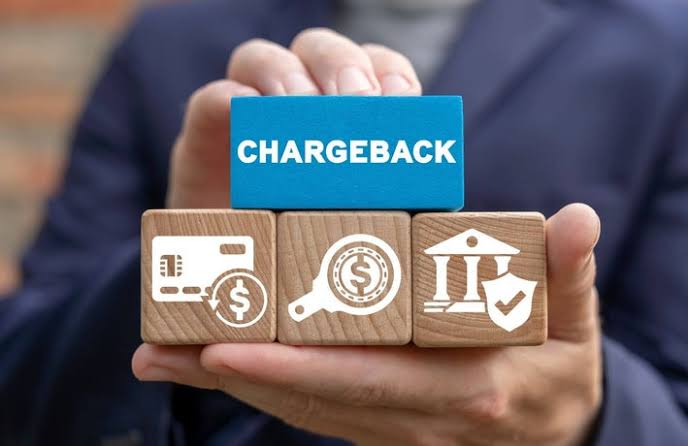
Refunds & Chargebacks — The Complete Guide
Last updated: August 11, 2026
Quick Answer: In refunds & chargebacks — complete guide terms, the fastest answer is this: a refund is usually the better first step when you can fix the problem directly, while a chargeback is the escalation step when the charge is unauthorized, unresolved, or already disputed.
- Refunds are merchant-initiated reversals.
- Chargebacks are bank- or card-issuer-initiated reversals.
- Refunds usually close cases faster than chargebacks.
- Chargebacks can involve evidence, deadlines, and fees.
- For many businesses, the lowest-cost option is often a fast refund.
- For serious disputes, consult your bank, card-network rules, or a qualified professional.
A customer wants money back. The clock is already ticking.
Refunds and chargebacks handle the same basic problem, but they do it in different ways: the purchase went sideways, and someone has to unwind it. For a business, the real question is not “what is a refund?” but this: when should you refund directly, and when is a chargeback going to happen anyway? I write about payments and consumer disputes, and I would treat this as a risk-management decision rather than a simple support ticket; for legal or financial edge cases, speak with a qualified professional and check sources such as the Consumer Financial Protection Bureau. This refunds & chargebacks — complete guide covers the basic choice, the practical risks, and the dispute path.
Refunds vs Chargebacks: The Real Difference That Matters
A refund is started by the merchant. A chargeback comes from the card network or the bank after the customer disputes the charge. Small wording difference. Big fallout. Refunds let you steer the conversation; chargebacks put the bank in the driver’s seat.
My rule would be simple: refund first when the claim is plausible, the customer is reachable, and the order value does not justify a fight. That keeps fees, admin work, and bank disputes down. Chargebacks are not “just another refund request.” They trigger card-network rules, deadlines, evidence collection, and the risk of chargeback ratios that can damage your merchant account.
Think of it this way:
- Refunds are for cases you can settle directly.
- Chargebacks are for cases the customer escalates through their bank.
- A refund can prevent a chargeback, but it does not erase every risk if the cardholder has already disputed the transaction.
A generic article usually gets this wrong in two ways. First, it treats chargebacks like a customer-rights shortcut, when they are really a dispute mechanism with formal rules; for edge cases, consult your bank, the CFPB, or another qualified professional. Second, it treats refunds like weakness. They are not. A fast refund can be the cheapest way to protect margin, reputation, and payment access, although the exact outcome depends on the dispute and your records.
The practical point is blunt: when the customer can still be made whole without opening a bank dispute, a refund is usually the better first move. If the customer says the charge was unauthorized, the item never arrived, or the merchant has already gone silent, the case may move into chargeback territory whether you like it or not. That math stops working fast.
Refunds & Chargebacks: When a Refund Is the Better Move

A refund makes sense when speed, certainty, and relationship value matter more than defending every dollar. I would choose a refund first for straightforward complaints: damaged goods, late delivery, the wrong item, duplicate billing, or a service that clearly failed to meet the agreed terms.
Why refunds win in these cases:
- You keep control. You can ask for the item back, issue a partial refund, or replace the product instead of paying chargeback fees and losing the dispute by default.
- You avoid bank escalation. Once a customer goes to their card issuer, the process becomes slower and more formal.
- You protect your merchant profile. Too many chargebacks can lead to higher processing costs, monitoring programs, or even account termination.
Refunds also work best when the customer is still responsive. Suppose someone emailed support, explained the issue, and gave you a fair chance to fix it; I would almost always resolve that internally before it turns into a payment dispute. A prompt refund can turn a bad review into a neutral one and keep the customer from trying a second route through their bank. Clean handoff. Less drama.
That said, refunds have real downsides. They can invite abuse if your policy is too loose, and they can train customers to ask for money back without returning goods. They also create their own paperwork if you need to reconcile inventory, taxes, or replacement shipments. A refund is not “free”; it is simply the lower-friction option when the facts are not in your favor.
Who should use refunds:
– Retailers with shipped goods and clear delivery records
– Subscription businesses handling cancellation confusion
– Service providers that can quickly confirm a miss
– Teams with active support channels and short response times
Who should not rely on refunds alone:
– Businesses hit by repeated fraud claims
– Merchants with high ticket values and weak documentation
– Sellers who cannot verify delivery or acceptance
If the issue is honest and fixable, refund. When the issue is suspicious, disputed, or already formal, move to the chargeback side of the decision.
Chargebacks: The Specific Situations Where They Win
Chargebacks are strongest when the bank has to step in because the merchant is unavailable, uncooperative, or the transaction is genuinely disputed. From the customer side, a chargeback is often the last resort. From the business side, it is a warning signal.
I would expect chargebacks in four broad situations:
- Unauthorized use of a card. The cardholder says they did not make the purchase.
- Goods or services not received. The customer paid, but the order never arrived or the service never happened.
- Merchandise not as described. The delivered item materially differs from what was sold.
- Merchant error or nonresponse. The seller refuses to help, disappears, or keeps providing vague answers.
Chargebacks are useful because they force a structured review. Banks and card networks require evidence, timing, and a decision. That matters when a merchant is unresponsive or the customer has already lost trust. In those cases, a direct refund may no longer be enough because the cardholder wants the bank record and the protection that comes with it.
The downside is obvious: chargebacks are expensive for everyone involved. They take time, they can create fees, and the merchant may lose the case even when the story is more complicated than the dispute form allows. Card networks also care about patterns, not just single cases. A business with many chargebacks can look risky even if some disputes are legitimate.
Who chargebacks favor:
– Consumers dealing with fraud or dead-end customer service, according to CFPB dispute guidance and card-network rules
– Merchants defending against false claims, if they have strong evidence
– Situations where delivery, identity, or authorization is documented
Who should not treat chargebacks as a normal workflow:
– Customers who can still resolve the issue directly
– Merchants who use chargebacks as a substitute for support
– Businesses with sloppy records or unclear terms
If I had to choose in a clean dispute, I would still try a refund first. If the merchant relationship is broken, the customer claims fraud, or the business is not responding, the chargeback path is the one that remains.
The Honest Side-by-Side

Here is the practical comparison I would use when deciding how to handle a problem.
| Criteria | Refund | Chargeback | Winner for this condition |
|---|---|---|---|
| Who starts it | Merchant | Customer through bank/card issuer | Refund if you want control |
| Speed of resolution | Usually faster when support is responsive | Usually slower because of review steps | Refund for simple disputes |
| Merchant control over outcome | High | Low | Refund |
| Risk to merchant processing standing | Lower | Higher if disputes pile up | Refund |
| Best for fraud claims | Only if you want to settle quickly and avoid escalation | Often the right channel when the cardholder says the charge was unauthorized | Chargeback for true unauthorized use |
| Best for product not received | Good if you can verify the loss and make it right | Useful if the merchant will not respond or tracking is disputed | Depends on merchant response |
| Administrative burden | Usually lighter | Heavier because of evidence submission | Refund |
| Evidence required | Minimal | Often substantial: receipts, tracking, communications, proof of delivery | Refund |
| Customer relationship impact | Often better | Often worse and more adversarial | Refund |
| When it makes sense most | Fixable mistakes, goodwill, disputed quality issues | Unauthorized, unresolved, or formally disputed charges | Refund for fixable issues; chargeback for broken cases |
The table points to the same conclusion I would make in a real dispute: refunds are the default tool; chargebacks are the escalation tool. If a business can resolve the issue directly, that is usually the cleaner path. If it cannot, the customer will often go to the bank anyway.
The part many articles skip is evidence. A refund needs judgment. A chargeback needs proof. That changes how you run your records, how fast you answer support tickets, and how you write your checkout terms. If you have no documentation, chargeback defense is weak. If you have no support process, refund prevention is weak.
For more detail on consumer dispute processes, I would look at the Consumer Financial Protection Bureau’s dispute guidance and the card-network rules relevant to your payment method. For example, Visa and Mastercard publish dispute and chargeback frameworks, and regulators such as the CFPB explain how consumers can challenge card charges. Those are the kinds of sources worth checking when your case gets complicated.
Refunds: Who Should Actually Use This, and Who Shouldn’t
Refunds are the right choice for merchants who value speed, customer trust, and low-friction resolution more than squeezing every challenged transaction. I would use refunds aggressively in businesses where mistakes are normal and easy to confirm: ecommerce fulfillment, digital subscriptions, event tickets with clear cancellation windows, and services where the work outcome is easy to inspect.
The strength of refunds is not just kindness. It is operational simplicity. You can close a case fast, stop support back-and-forth, and avoid forcing a customer to wait for their bank. That often matters more than the amount at stake, especially for low- and mid-value orders.
The weakness is the one people feel later: refunds can be abused. If your policy is too broad, you will see serial returners, partial abuse, and customers who learn that “ask support first” is a way to test the system. Refunds also have a habit of creating hidden costs. Shipping may not come back. Labor is gone. If the item is resellable only at a discount, the true loss is bigger than the refund amount.
I would not lean on refunds alone if:
– You sell high-risk goods with frequent fraud claims
– Your support inbox is understaffed
– Your checkout and order confirmation emails are unclear
– You have no return or cancellation terms worth enforcing
The ideal refund user is a merchant who can answer fast, document the reason, and keep the rules consistent. If you want a policy that customers respect, it has to be predictable. A refund process that changes by mood or volume just creates more disputes later.
If I were advising a business owner, I would say: use refunds when you can verify the issue and you can afford to lose the sale. Do not use them as a substitute for fraud prevention, and do not use them so rarely that every customer complaint turns into a bank dispute.
Chargebacks: The Specific Situations Where They Win
Chargebacks are the right answer when the merchant-side process has failed or the transaction itself is suspect. I would expect them to be strongest in cases where the customer has already tried to solve the problem and hit a wall. If there is a real fraud concern, a missing shipment, or a seller who will not respond, the card issuer is often the only remaining route.
They also win when the evidence belongs with the merchant. That sounds backward, but it is true. If a business has the delivery scan, the signed receipt, the message thread, and the service logs, a chargeback defense can be effective. Without that evidence, the merchant usually loses on default or weak rebuttal.
The downside is that chargebacks carry more friction and more risk than people realize. They can take time to process, and they can sour the customer relationship even when the customer is justified. They also force merchants to build evidence discipline. If your records are thin, chargebacks are brutal.
Chargebacks are not ideal for:
– Small mistakes that support can fix in one exchange
– Cases where the customer has not contacted the seller
– Situations where the issue is subjective and both sides are acting in good faith
I would treat chargebacks as the right move when the customer has already reached the end of the road. That is the line. If a refund can still solve it cleanly, I would start there. If the merchant is not cooperating or the claim involves unauthorized use, the chargeback path makes sense.
For merchants, the lesson is simple: treat chargebacks as a symptom. If you have many of them, the issue is usually not the bank. It is the checkout flow, the fulfillment process, the support response time, or the fraud controls.
Our Verdict: Which One to Choose and Why
Choose refunds if the issue is fixable, the customer is still in contact, and you want the fastest low-conflict resolution. Choose chargebacks if the transaction is unauthorized, the merchant is unresponsive, or the customer needs the bank to force a review. Neither if you are using either one to paper over a broken checkout, chronic fraud, or a refund policy no one understands.
That is the call I would make. Refunds should be the first-line tool because they keep control with the merchant and usually cost less in time and reputation. Chargebacks are the escalation tool because they bring in the bank, which is useful when the merchant process has failed or the cardholder needs protection from a disputed or unauthorized transaction.
If you are a customer, this means:
– Ask for a refund first if the seller is reachable and the problem is ordinary.
– Move to a chargeback if the seller ignores you, refuses a valid claim, or the charge was not yours.
If you are a business, this means:
– Make refunds easy for legitimate complaints.
– Make chargebacks rare by answering fast, shipping accurately, and documenting everything.
The decision is not moral. It is practical. The better choice is the one that resolves the problem with the least damage to the people and systems around it.
When to Reconsider This Choice Entirely
There are a few situations where the refund-versus-chargeback decision is the wrong starting point.
-
The card was stolen or the transaction is clearly fraudulent.
Do not frame this as a customer-service issue. Treat it as a payment-security case and follow the issuer’s process. For merchants, that means preserving logs and evidence immediately. -
The problem is not the charge itself but a contract dispute.
If someone is arguing over scope, deliverables, usage rights, or performance terms, a payment reversal may not settle the underlying issue. A formal dispute process or legal advice may be more appropriate. -
The account has already been closed, canceled, or frozen.
At that point, the operational question changes. You may need to resolve tax, accounting, compliance, or collections issues before any reversal makes sense. -
The merchant has no records.
If you cannot prove shipment, delivery, service delivery, or authorization, your practical options narrow fast. In that case, the right move may be to stop fighting the payment and fix the internal process that created the mess.
A generic guide stops at “refunds are nicer, chargebacks are stronger.” That misses the real decision. The real decision is whether the case can still be solved directly, whether the facts are documented, and whether the business can afford the dispute path.
How I’d Handle Real-World Scenarios
If a customer says, “The package never arrived,” I would check tracking, delivery confirmation, and the customer’s history. If the carrier lost it and the order value is modest, I would refund or resend. If tracking shows delivery and the customer claims otherwise, I would ask for a short window to investigate before escalating.
When someone says, “I don’t recognize this charge,” I would treat it differently. That is not a normal refund request. I would confirm authorization records, check fraud signals, and tell the customer what channel to use if the payment was truly unauthorized.
If a customer says, “The product is not what was advertised,” I would review the listing, images, and complaint details. If the mismatch is real, I would refund quickly. If the complaint is vague, I would ask for photos and a clear explanation before deciding.
If I were running a support team, I would give agents a simple rule: **fix obvious merchant errors with refunds; reserve
